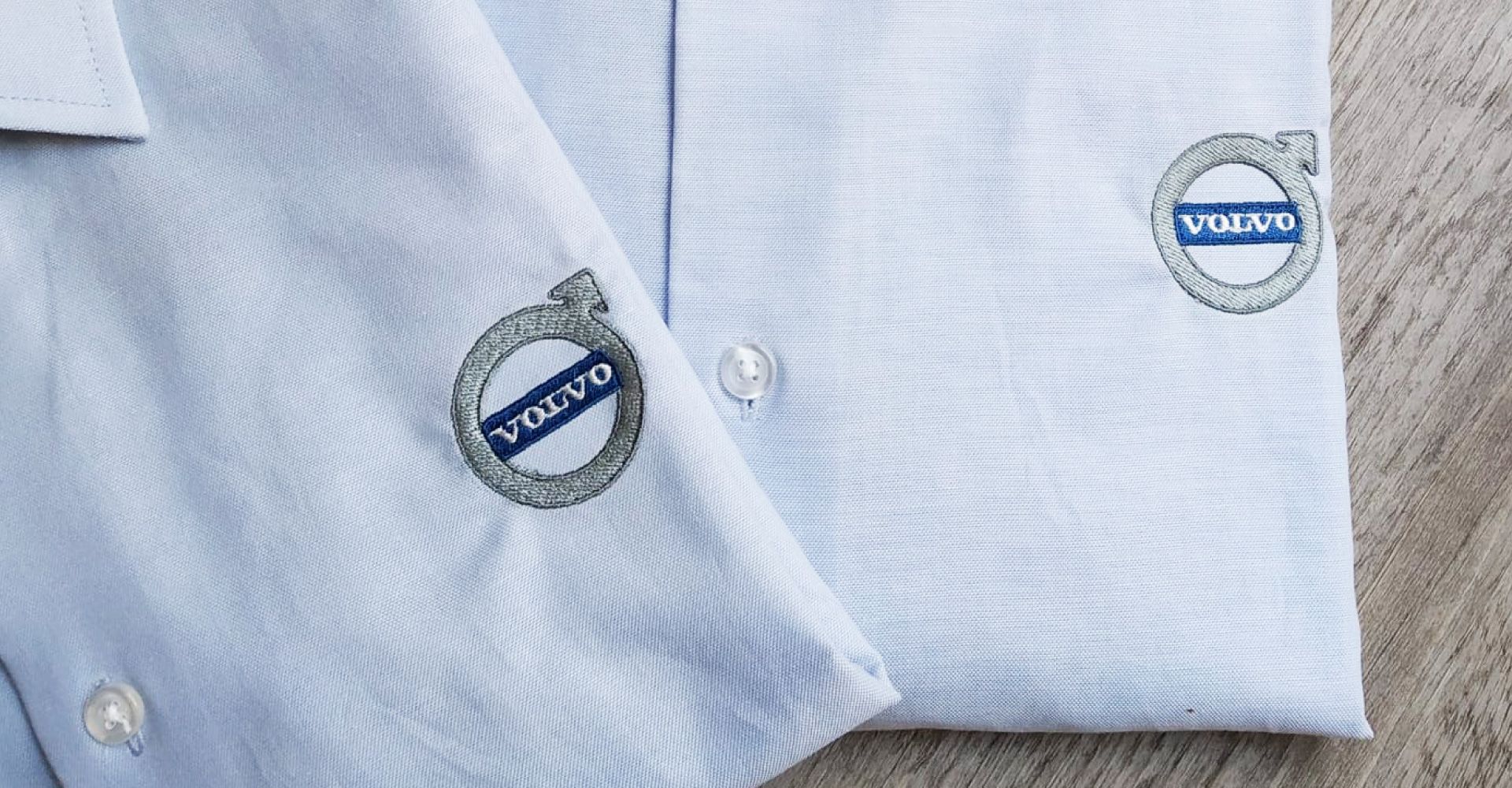
What is embroidery?
Embroidery is a textile customization technique that involves sewing threads onto a garment to create designs, logos, lettering, and other decorative elements. Embroidery has long been used in the textile industry to give clothing a professional, high-quality look.
In recent years, embroidery has become increasingly popular in the business world as a way to personalize workwear and employee uniforms. Embroidery provides excellent durability and strength to clothing, making it ideal for garments that are washed regularly. In addition, embroidery is also used to customize promotional merchandise such as bags, backpacks, hats, and other products that help promote a brand.
At TEXTILO, we offer high-quality embroidery for companies looking to customize their workwear and uniforms. Our embroidery experts are highly trained and have extensive experience in the textile industry. We use the latest technology in embroidery machinery and design software to ensure the final result is of the highest possible quality.
Features of Embroidery
Durability is one of the most notable features of embroidery. The embroidery threads are sewn directly onto the garment, making them resistant to abrasion, washing, and daily wear and tear. Embroidery is also resistant to fading, meaning the colors will remain bright and vibrant for a long time.
Another important feature of embroidery is the professional look it adds to a garment. Embroidery provides a high-quality finish that gives clothing a professional and sophisticated appearance. Embroidery is a popular choice for corporate uniforms, workwear, and promotional apparel.
The fabric weight is also important when it comes to embroidery. Garments with a higher weight are ideal for embroidery, especially when it comes to large logos. Thicker, heavier garments are better able to support the embroidery threads and offer a higher-quality embroidery result.
Another characteristic of embroidery is its simplicity. Embroidery techniques are best suited for simple designs without too much detail. Complex designs with many details can be difficult to embroider and may result in lower quality. That’s why, at TEXTILO, we recommend that our customers opt for simpler designs to achieve the best results.
Benefits of Embroidery
Embroidery offers many benefits for businesses. In addition to giving workwear a professional appearance, it also helps foster company culture and increase employees’ sense of belonging. The use of customized uniforms and garments with embroidered logos also helps create a strong and consistent brand image.
Another benefit of embroidery is its ability to build customer loyalty. By customizing quality products with their brand, companies can create personalized corporate gifts that help foster customer loyalty and satisfaction.
- Durability. Ideal for garments that are washed regularly; minimal wear and tear.
- Professionalism. Provides a professional, high-quality finish.
- Fabric weight. The best option is to choose high-quality garments with medium- to high-weight fabric, especially for large logos.
- Simplicity. This technique works best with simple designs that don’t have too many details.
How do I place an order with Textilo?
Customize over 2,500 products with your company’s logo

Contact
1. Fill out the form

Proposal
2. Review designs and quote

Approval
3. Confirmation and production

Shipping
4. Store or ship worldwide
Companies that boost their brand with Textilo
More than 500 companies trust us





Tips for achieving high-quality embroidery
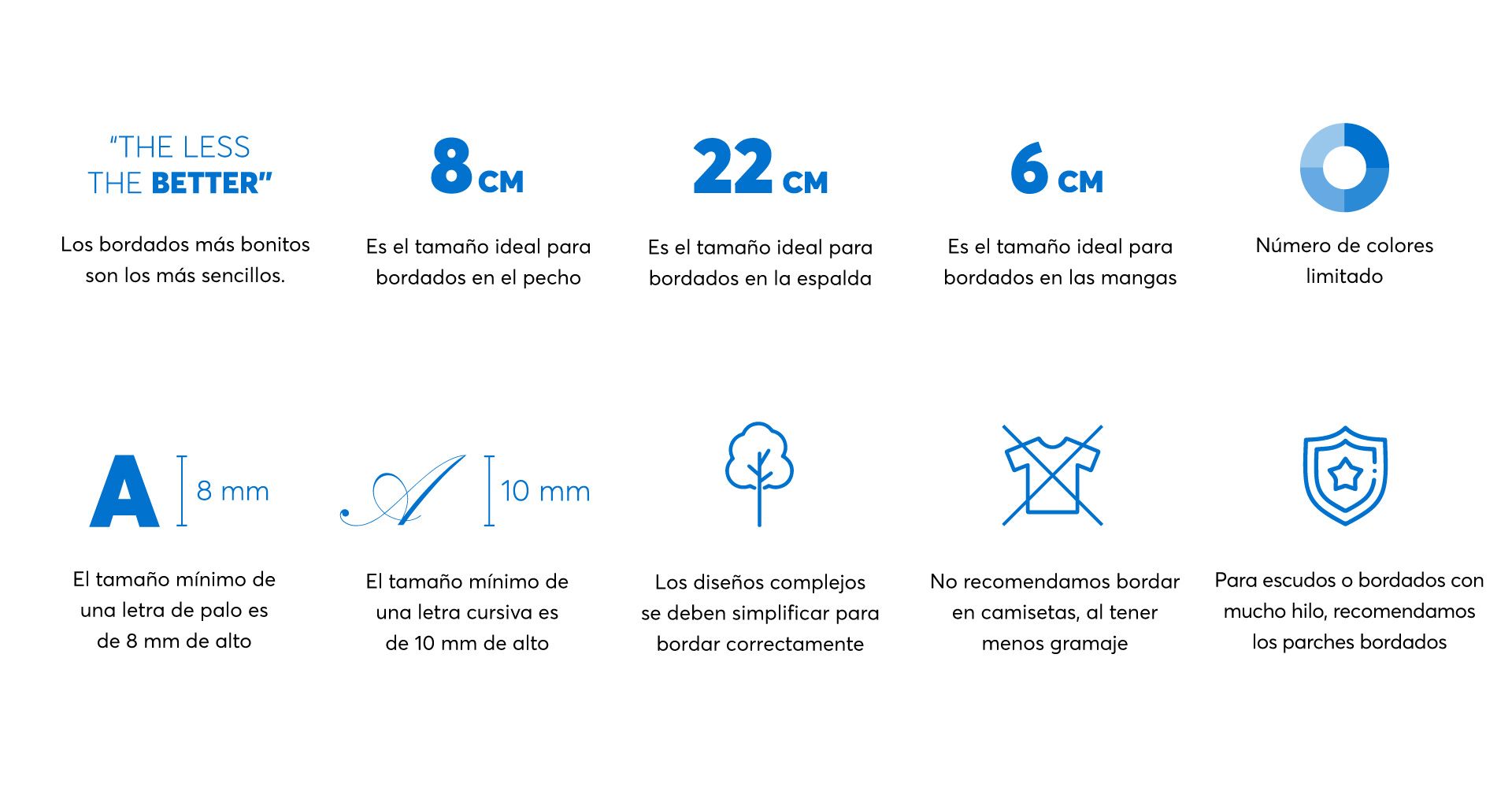
At TEXTILO, we go the extra mile and will advise you on the best options based on the type of garment, placement, and design for your embroidery. It’s extremely important to choose the right garments for embroidery that meet the customer’s needs, since the quality of the finish will depend on the fabric’s composition, weight, and characteristics—that’s why we always recommend embroidering on garments weighing more than 150 grams. The placement of the embroidery is also a key factor due to the elasticity the garment may have in that area. Embroidering on the chest of a polo shirt is not the same as embroidering on the back or sleeve—it all depends on the size and complexity of the design you want to embroider.
We know that embroidery is a complex technique to understand for anyone who isn’t spending all day working with these concepts, managing orders, handling different fabrics, and dealing with everything related to the industry; after all, there’s even a university specialization in fashion focused on embroidery. That’s why, at TEXTILO, we’re always available to help you with whatever you need and answer any questions you may have—so don’t hesitate to contact us so we can recommend the best way to proceed with your embroidery.
Types of Embroidery
Classic Embroidery
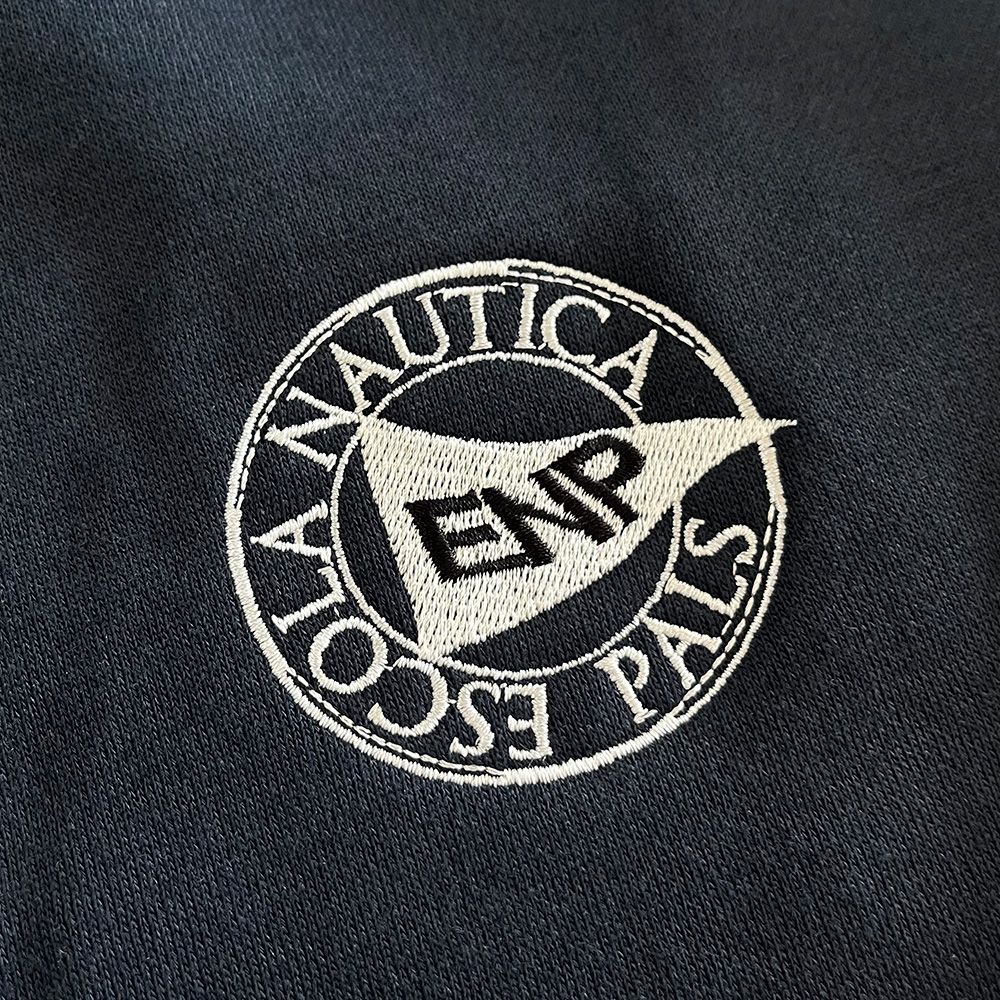
There are different types of embroidery. Classic embroidery is the traditional method, done with thread using our state-of-the-art embroidery machines featuring Japanese technology from TAJIMA. In addition, we use threads from the German brand MADEIRA, one of the most renowned in the industry, offering a wide variety of colors, including fluorescent and metallic threads.
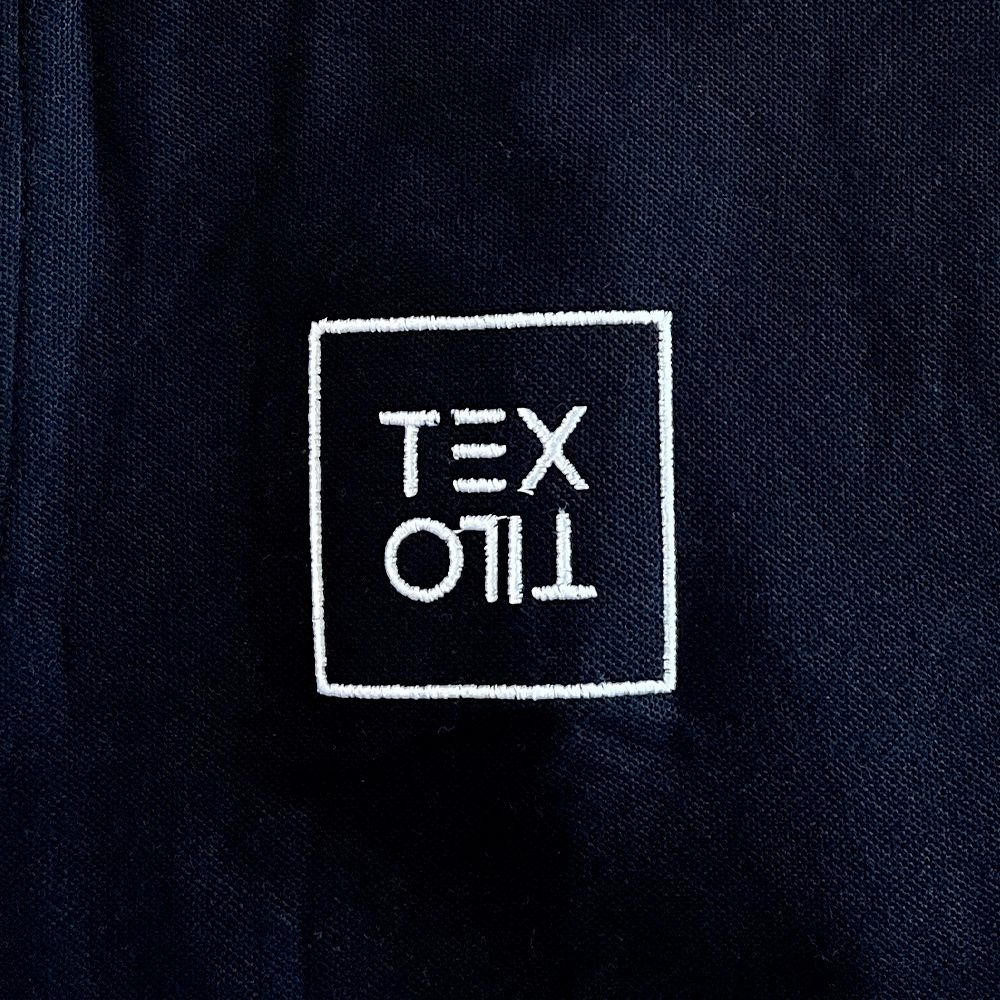
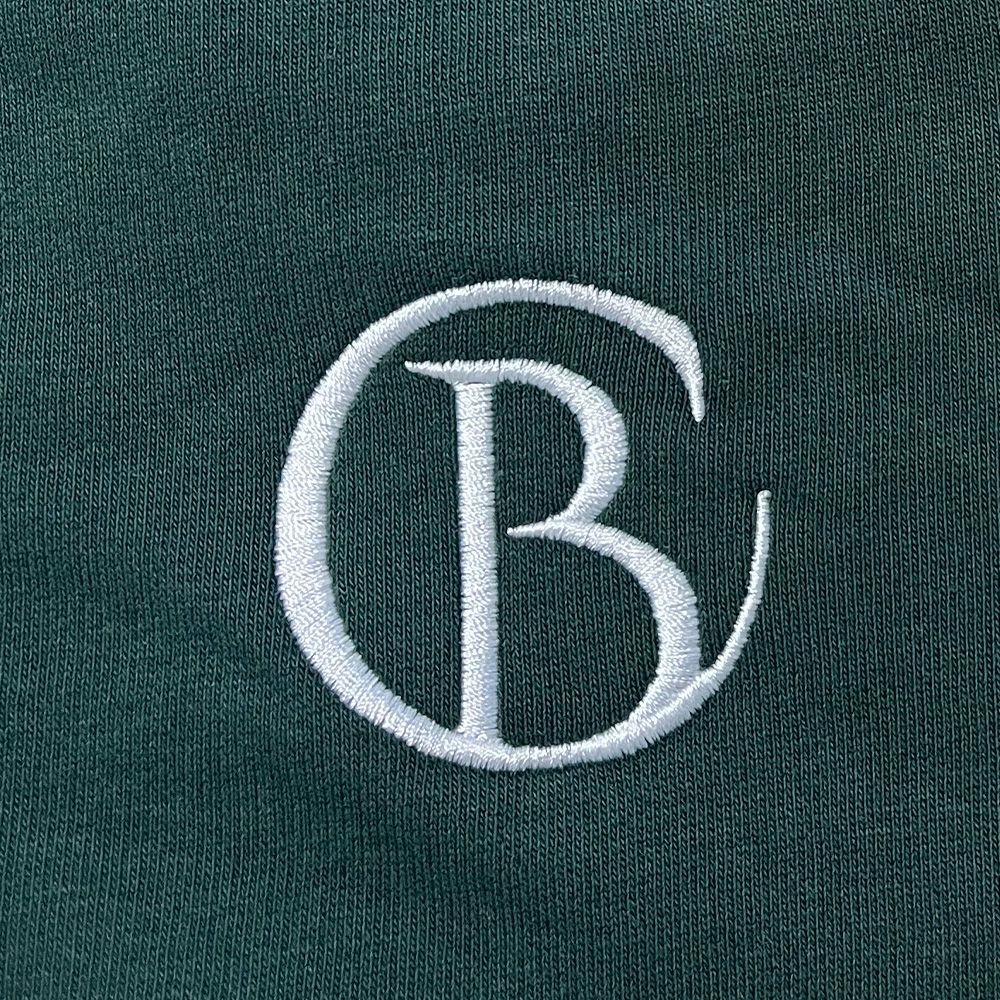
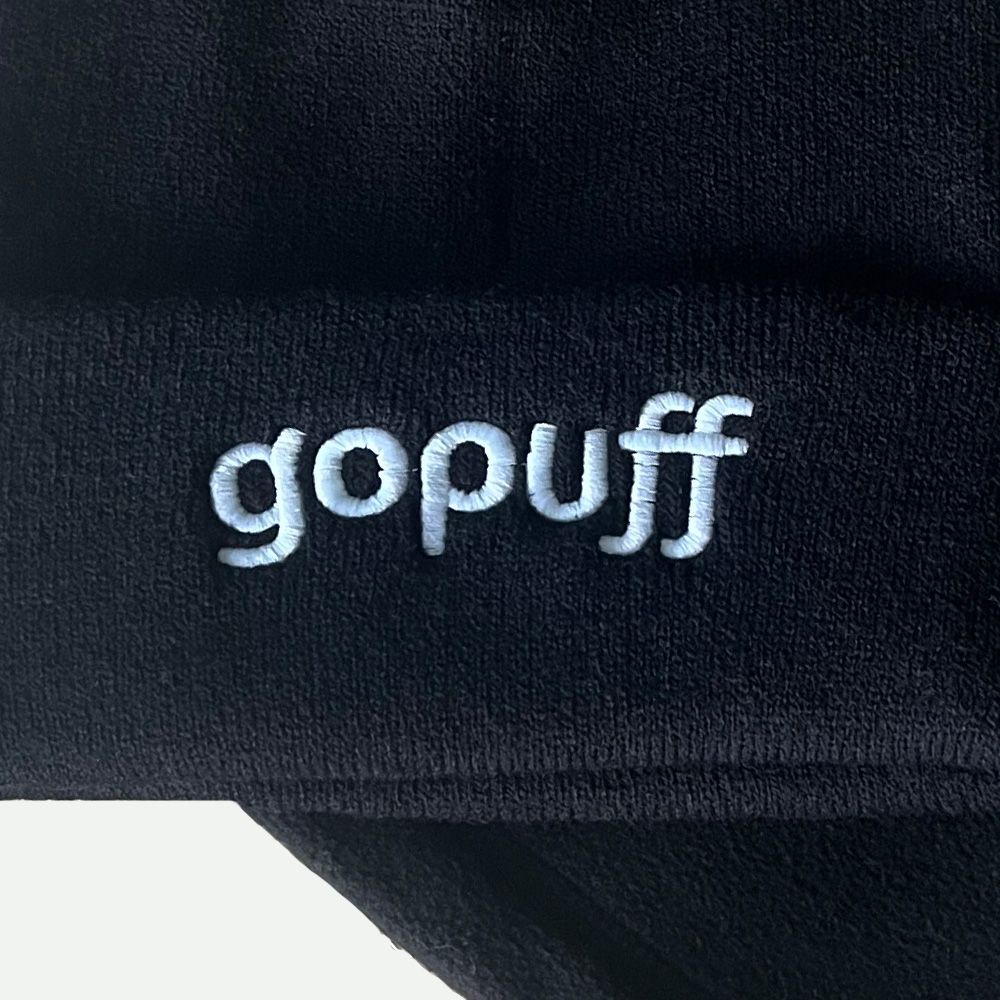
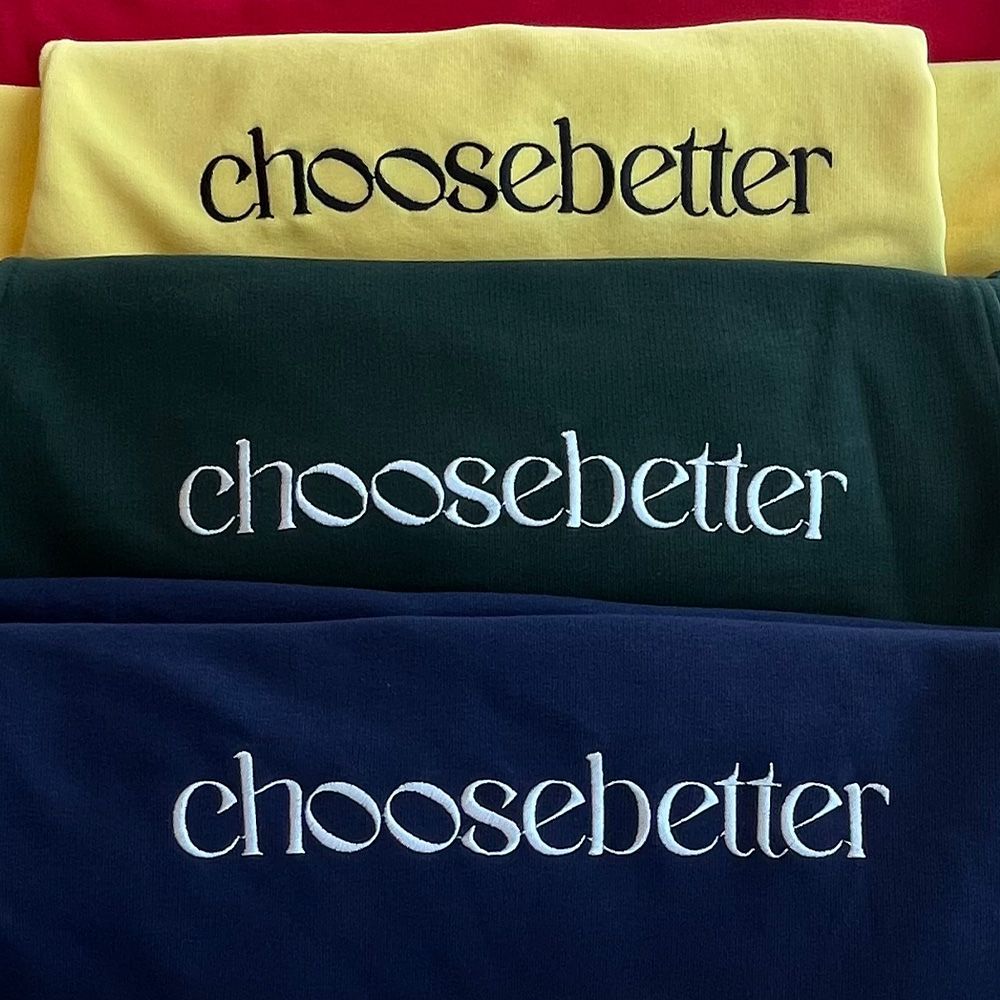
Classic embroidery is a decorative design made with thread on top of fabric. It barely protrudes from the garment and is stitched directly onto the fabric. It looks stunning on clothing made from medium- to heavyweight fabrics. This type of customization provides a very professional and durable finish.
However, this technique requires simple logos or designs. The number of colors that can be used is also limited, and the elements cannot be too small. Washing embroidered garments does not require special care, as the embroidery is very durable, but we always recommend washing in lukewarm water and turning the garment inside out.
3D Embroidery
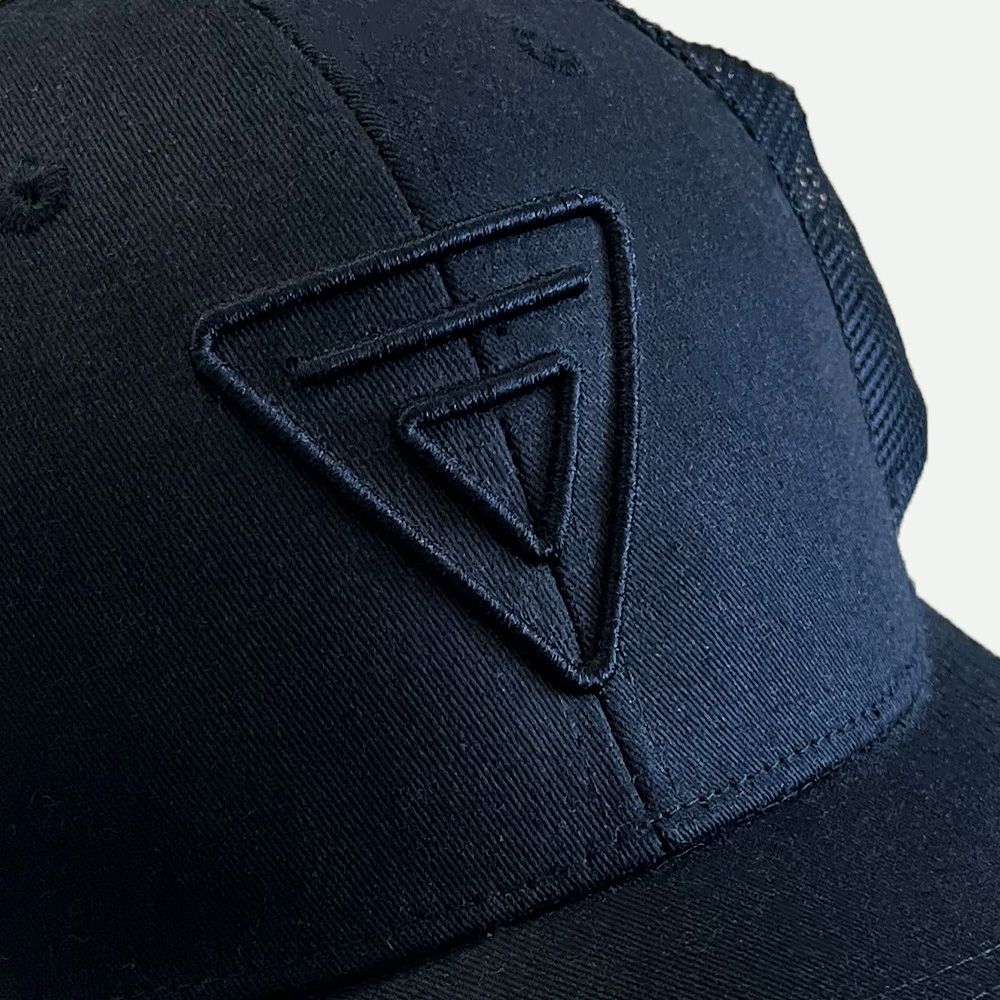
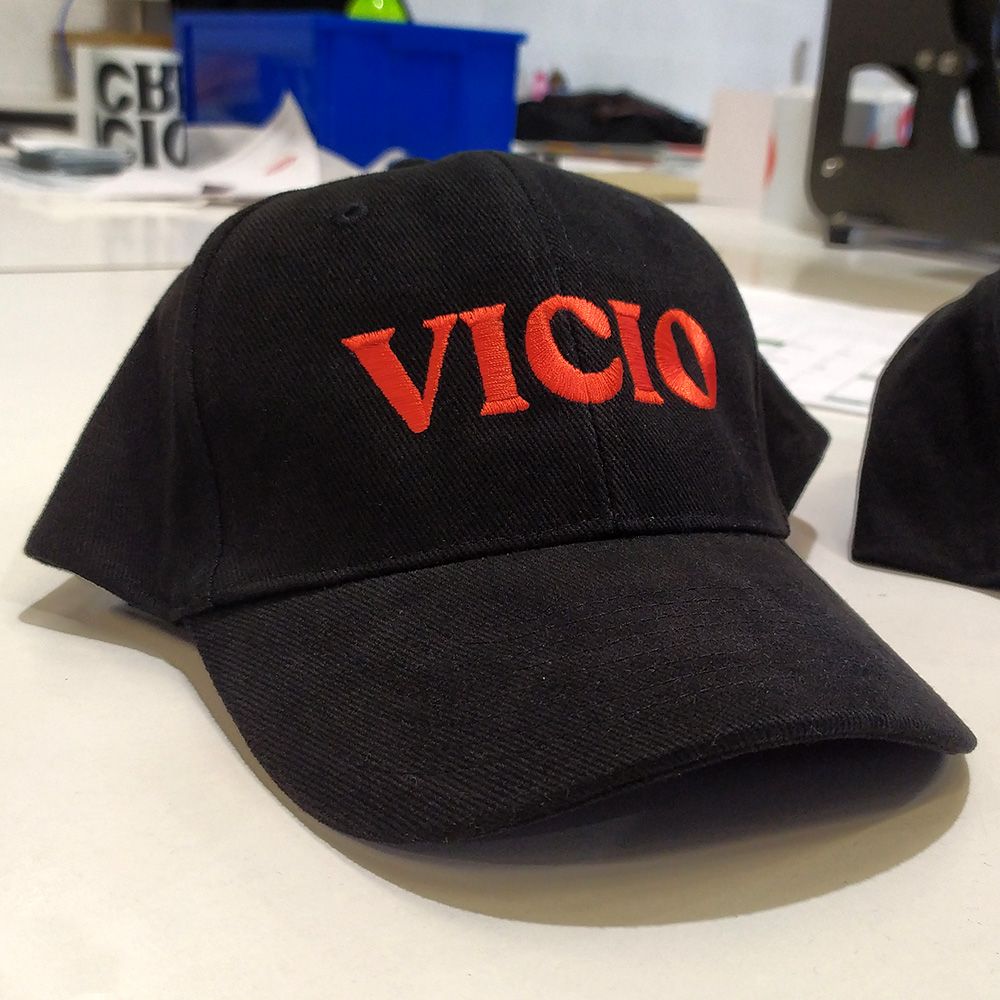
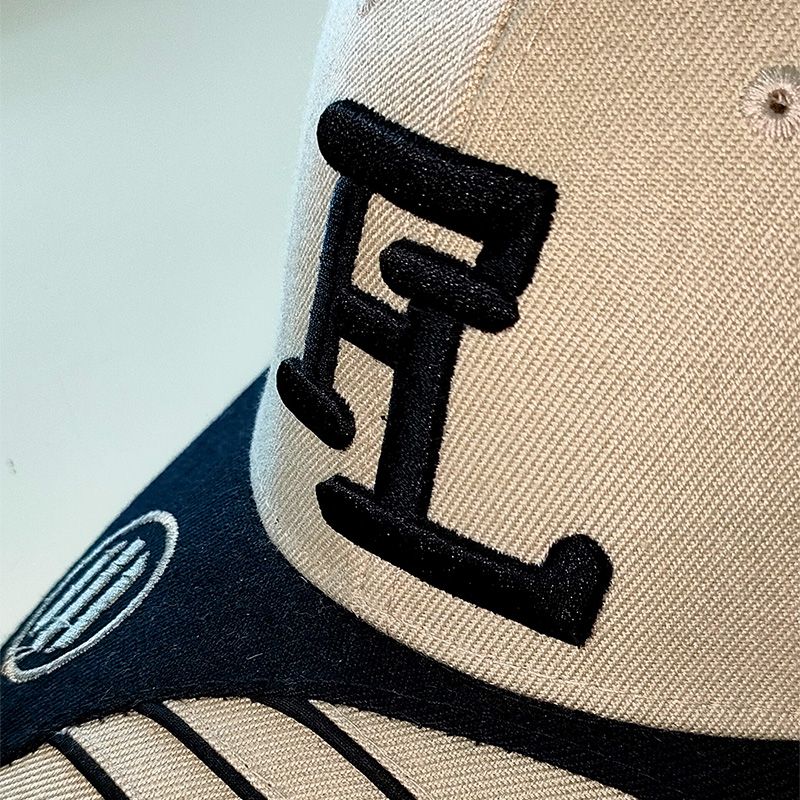
3D embroidery, as its name suggests, is a type of raised embroidery. It has a strong visual impact, as it stands out from the garment and is very eye-catching. It’s a huge hit in urban fashion.
This type of embroidery is mostly used on caps, although it can be used on other garments that are thick enough. It’s also important that the designs be large and not too detailed.
To create 3D embroidery, we need a sheet of foam or rubber (EVA), a flexible, spongy material that is placed on top of the surface where the embroidery will be done. Then, the embroidery is stitched onto the sheet attached to the garment, and finally, the excess sheet is removed. This is how this three-dimensional embroidery is achieved.
Embroidered Patches
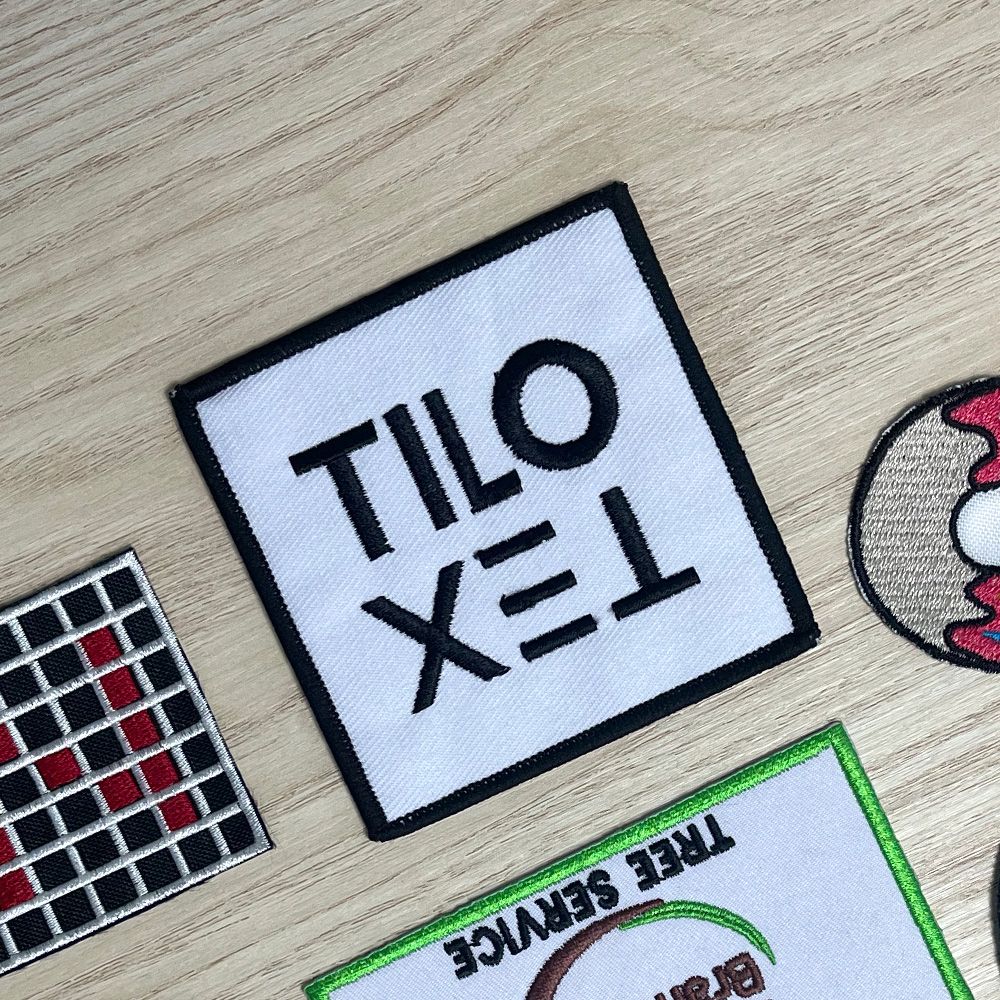
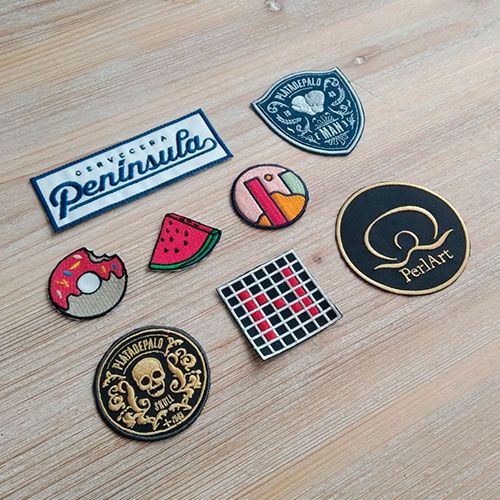
Embroidered patches are another important type of embroidery. They’re ideal for crests, uniforms, or designs that require a large amount of thread. They’re very useful for garments that don’t allow for direct embroidery on their surface.
At Textilo, we offer a variety of different patches that you can browse in our Patches category. Embroidered patches are a specific type of patch—just one of the 8 different types we offer.
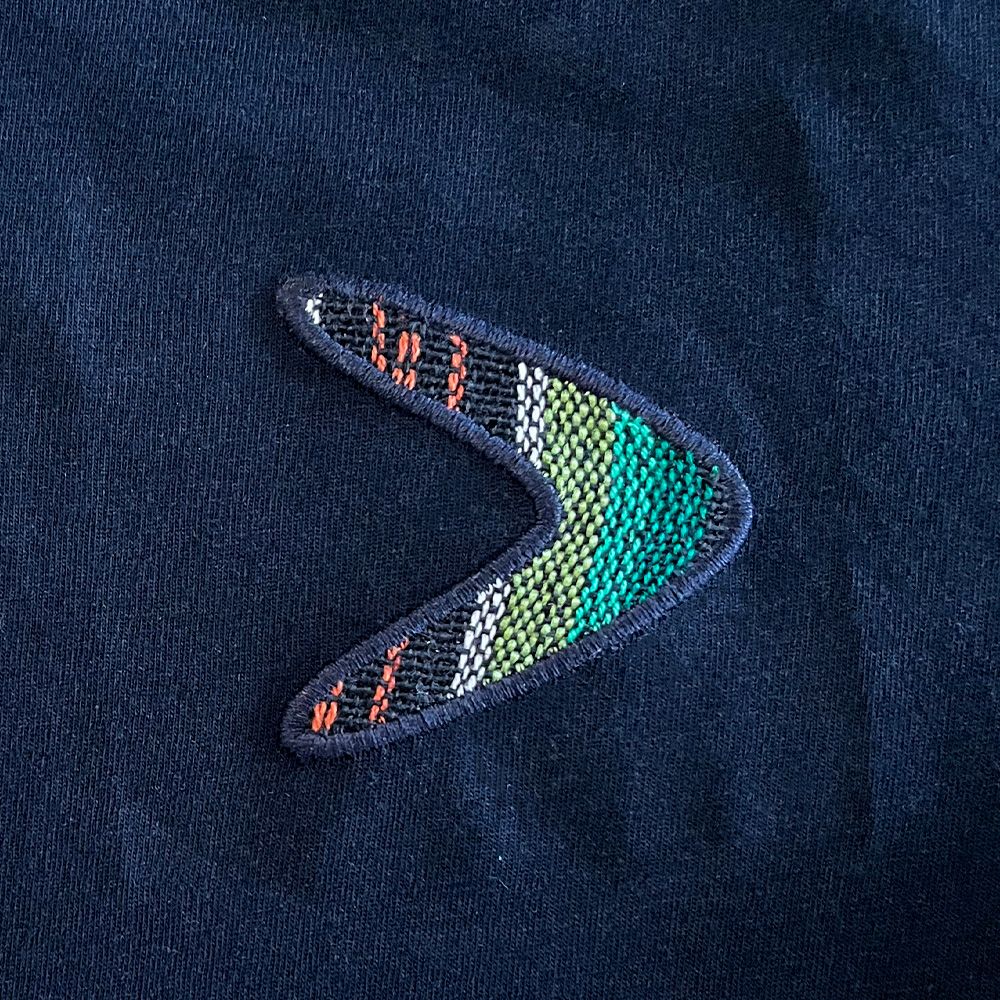
Unlike the previous types, in this case the embroidery isn’t done directly on the garment; instead, it’s done on a backing sheet or fabric that’s then applied to the garment using heat (heat-seal patches) and may even feature thread reinforcement along the edges. Give them a try—they look amazing!
Examples of Custom Embroidery